home
-
Microfluidics (3)
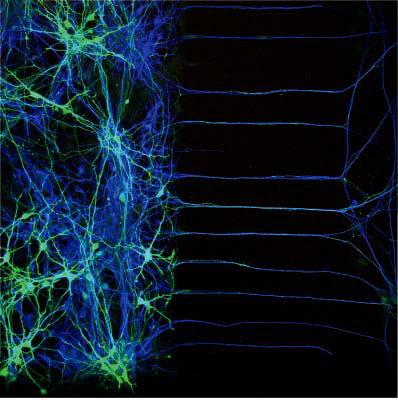
This is a picture of motor neurons grown in a microfluidic device. These devices allow for differential treatment of cell bodies versus distal axons. This technology taken together with the unique properties of these cells make it possible to spatially dissect fundamental aspects of neuronal signal transduction. -
synapses (1)
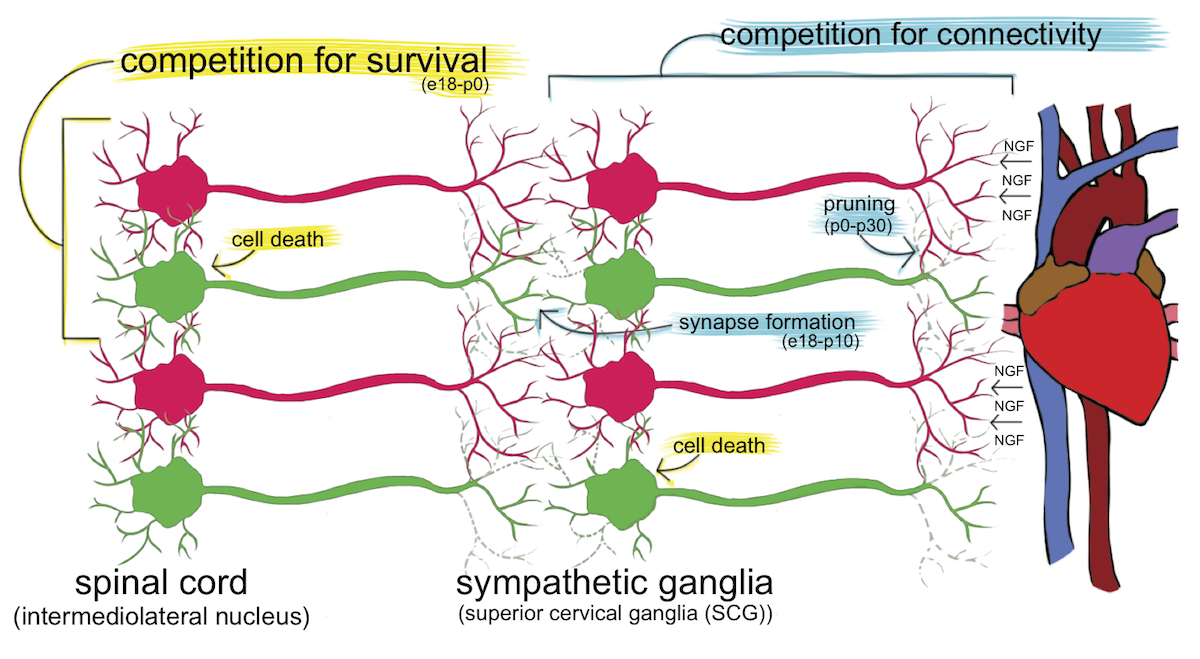
This is a picture of post-synaptic specializations (red) on dendrites (blue) of sympathetic neurons. We are interested in the signals regulating synapse formation and refinement. The sympathetic nervous system represents a tractable system to study several aspects of synaptic connectivity. -
electroporated chick spinal cord (2)
Here we electroporated the spinal cord of a chick embryo with DNA encoding a protein thought to be involved in neuronal competition for survival. Because of the nature of this type of electroporation, we only express this gene in one half of the spinal cord and dorsal root ganglia. The non-electroporated half serves as an internal control. The fluorescence observed on the non-electroporated side suggests that the protein of interest is localized to commissural axons. -
brain (1)
This is an in situ hybridization for a gene of interest on a section of the new born mouse brain. It is expressed in specific structures including the hippocampus, cortex, and striatum. -
transfected neurons (2)
This is a picture of sympathetic neurons transfected with green fluorescent protein. The ability to efficiently transfect neurons is a relatively new advance, which allows us to rapidly analyze the role of various genes in neuronal processes such as axon growth and survival.